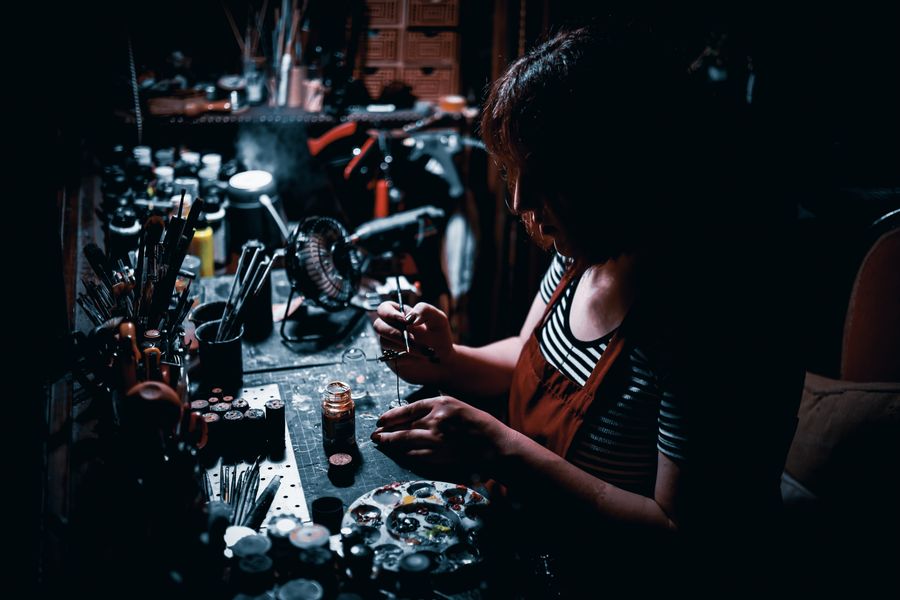
Castvein is a fourteen-person casting shop on Godfrey Avenue. We cut silicone molds from sculptors' masters and pull polyurethane kits in runs of twenty to five hundred — pressure-cast, fettled, bagged and boxed for release.
Most shops price casting by the pull and hope the mold lasts. We price the mold and the run separately, tell you the pull count a block will realistically survive, and re-cut it when the parting line starts to soften. A kit that arrives with clean keys and no flash is cheaper for you than a discount that costs your painters an evening each.
Six things we do. Everything else — painting masters for you, box design, fulfilment — we will happily point you at someone who does it better.
“They sent me a test pull with a note about where the block was going to trap air on the cloak, and a suggestion for a vent I hadn't thought of. Second pull was clean. That is the whole relationship, really.”
Independent sculptor — Columbus, OH
“We ran 260 kits across two blocks for a convention release. Both molds came back to us with the pull counts written on the side and an honest note that block two was done. No surprises in week three.”
Wickfield Miniatures — label
“Our props go out under stage lights and everything is inspected twice. Castvein's fettling is the only outsourced finishing we have stopped re-checking.”
Ridgeway Stage Props
Since 2011 we have cut molds for
480 Sculptors and Labels
from single-commission busts to five-hundred-pull convention runs
Resin behaves the same whether it is a demon's wing or a bracket for a museum case, but the people ordering it want very different things from us. These are the five conversations we have most weeks, and what each one usually needs first.
If your work does not fit any of them, say so plainly in your enquiry — mixed-material assemblies and very large single pours are the two we most often turn down, and it is fairer to say that in week one.
Multi-part kits with keyed joints, usually 60–300 pulls timed to a convention date. We quote the block, the pull rate and the fettling separately so you can see where a late art change actually costs you.
One master, one block, twenty to fifty pulls. We will tell you honestly if your master needs keying or venting work before it is worth cutting silicone around it.
High part counts, small parts, tight tolerance on bases and pegs. Pinning holes cast rather than drilled where the geometry allows it.
Replicas and stand-ins where the original cannot leave the case. Non-marking mold compounds, documented pull counts, and parts weighed on receipt.
Short-run housings and fixtures where injection tooling cannot be justified. Shore-rated urethanes, colour-matched, with a material data sheet in the box.
Quotes go out with a mold plan attached: where the parting line sits, how many parts the kit splits into, and the pull count we expect the block to hold. If any of that will not work for your release date, you will know before you have paid for silicone.
Post it, or bring it in on a Thursday when the office is staffed. We photograph it on arrival, weigh it, and send the photographs back to you with the mold plan so you can see it got here intact.
We cut the block, pull one, and send you photographs of the raw casting before it is cleaned up. Nothing goes into production until you have looked at a part that came out of the actual mold.
Pulls come off in batches, get fettled, checked against the master, bagged by part and boxed by kit. The mold goes on the rack with your name on it, or back to you if you would rather hold it.
The tin-cure substitute we ran through spring is off the shelf again. Platinum-cure blocks are quoted at standard turnaround from this week. Material notes.
A 30-litre pot now runs alongside the two 15-litre chambers, which takes larger single pours off the queue. What is on the floor.
Runs over 200 pulls now need masters with us eleven weeks out rather than nine. Run scheduling.